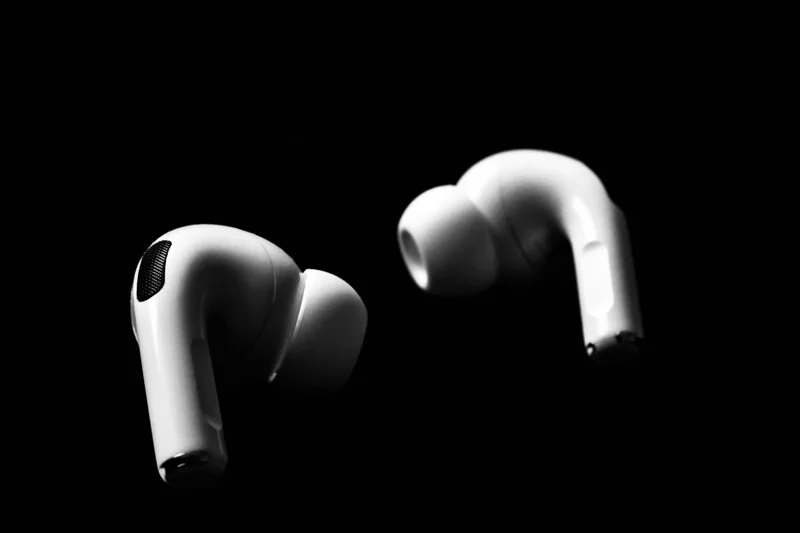
Fake AirPods Pro are no longer easy to dismiss.
A few years ago, most counterfeits gave themselves away quickly. The box looked wrong. The plastic felt cheap. The pairing process failed. The sound quality was poor. In many cases, you could tell something was off within minutes.
That is not always true anymore.
Modern counterfeit AirPods Pro can look surprisingly convincing. Some come in sealed boxes. Some use copied serial numbers. Some trigger the familiar iPhone pairing animation. Some even imitate parts of Apple’s settings menu closely enough to fool casual buyers.
That makes authentication more complicated.
The mistake many people make is looking for one single proof: a serial number, a sealed box, a pairing animation, or a valid-looking receipt. In reality, none of these checks is enough on its own.
The better approach is to inspect the product as a whole.
You are not looking for one dramatic flaw. You are looking for consistency.
The Box Is the First Clue
Apple packaging is not just packaging. It is part of the product experience.
The cardboard, print quality, spacing, labels, pull tabs, and finish are usually extremely controlled. That is why the box is often the best place to begin.
At first glance, fake AirPods Pro packaging may look correct. The product image may be in the right place. The typography may look close. The labels may include all the expected codes and regulatory markings.
But closer inspection often tells a different story.
On genuine Apple packaging, printing should look sharp and controlled. The product image should have clean edges. Small text should remain readable. Regulatory information should not look blurry, cramped, or uneven.
Counterfeit boxes often fail in subtle ways. The white cardboard may look slightly gray or warm. The product image may be a little too dark. The font weight may feel almost right, but not quite. Labels may be aligned slightly too high, too low, or too close to the edge.
These are not always obvious defects. They are small inconsistencies.
But small inconsistencies matter.
Sealed Does Not Mean Genuine
One of the most dangerous assumptions buyers make is that a sealed box must be authentic.
It does not.
Counterfeiters know that sealed packaging creates trust. Because of that, many fake AirPods Pro are sold in boxes that look unopened.
The pull tabs are worth inspecting carefully.
Apple’s tear strips usually feel precise. They sit cleanly on the box, remove smoothly, and leave a controlled opening experience. A poor-quality counterfeit may have tabs that feel too stiff, too loose, slightly crooked, or unevenly glued.
The plastic-free paper seal system Apple uses on newer packaging is also difficult to reproduce perfectly. If the tabs feel rough, misaligned, or poorly cut, that should raise suspicion.
A sealed box is reassuring only when everything else also checks out.
On its own, it proves very little.
The Label Can Reveal Manufacturing Sloppiness
The product label is one of the most important inspection points.
This is where you usually find the serial number, model number, barcode, regulatory markings, and product description.
A counterfeit label may look convincing at normal viewing distance. Under closer inspection, problems can appear.
Look for spacing issues. Check whether the text blocks are aligned. Compare font weight and punctuation. Make sure symbols are sharp and not slightly distorted.
Common warning signs include:
- text that looks too bold or too light
- uneven spacing between lines
- blurry small print
- barcodes that look poorly printed
- regulatory icons that appear compressed or misaligned
- inconsistent punctuation or capitalization
These details are easy to overlook because most people focus only on the serial number.
That is a mistake.
The serial number is only one part of the label. The quality of the entire label matters.
A Valid Serial Number Is Not Enough
This is probably the most important point in the entire guide:
A valid serial number does not prove your AirPods Pro are genuine.
Many counterfeit products use copied serial numbers from real Apple devices. When you enter the serial number on Apple’s website, it may appear valid because the number itself belongs to a genuine product somewhere else.
That does not mean the AirPods in your hand are authentic.
The serial number should be treated as supporting evidence, not final proof.
If the serial number looks valid but the packaging quality, label printing, hinge, software behavior, or purchase source feels suspicious, you should continue investigating.
Counterfeit detection is not a single-step process.
The Charging Case Is Often More Honest Than the Box
The charging case is where many counterfeits begin to show their limitations.
A genuine AirPods Pro case usually feels dense, precise, and well-finished. The lid opens with controlled resistance. The hinge does not feel loose. The seams are clean. The LED is evenly diffused. The charging port is neatly machined.
Counterfeit cases may look similar in photos, but the physical feel can be different.
The lid may wobble. The hinge may feel weak. The case may feel too light. The speaker holes may be uneven. The USB-C or Lightning port may have rough edges. The pairing button may feel mushy or poorly seated.
These are tactile details. They are difficult to judge from online listings, but obvious once you handle the product.
That is why buying from marketplace photos alone is risky.
Photos can hide what touch reveals.
Look Carefully at the Earbuds
The earbuds themselves deserve slow inspection.
At a distance, many clones look almost identical to genuine AirPods Pro. The shape is familiar. The white plastic looks similar. The silicone tips may fit. The stems may have the same general proportions.
But the details are harder to copy.
Inspect the speaker mesh. Genuine mesh should look clean and evenly seated. Look at the vents and sensors. They should be symmetrical and precisely placed. Check the seam lines on the stems. They should not look rough, wide, or uneven.
Also inspect the silicone ear tips. Apple’s tips have a specific fit and finish. Counterfeit tips may feel thinner, stiffer, or less precisely molded.
Again, the goal is not to find one isolated imperfection.
The goal is to see whether the entire product feels consistent with Apple’s manufacturing quality.
The Pairing Animation Is Not Proof
The iPhone pairing animation used to be a strong trust signal.
Today, it is not enough.
Some counterfeit AirPods Pro can trigger a pairing popup that looks very similar to Apple’s official animation. For many buyers, this creates instant confidence. That is exactly why counterfeiters imitate it.
Do not stop at the animation.
Open Bluetooth settings. Tap the information icon next to the AirPods. Check which options appear.
Genuine AirPods Pro should expose Apple-specific controls and features, depending on the model and firmware version. These may include noise control settings, ear tip fit testing, spatial audio, Find My support, firmware information, and other integration points.
Some counterfeits imitate parts of this interface.
Few imitate everything perfectly.
The deeper you go into the Apple ecosystem behavior, the harder it becomes for a fake product to remain convincing.
Performance Is Harder to Fake Than Appearance
The strongest counterfeits often focus on visual imitation.
Performance is another matter.
Test Active Noise Cancellation. It should make a clear and immediate difference in a noisy environment. Test Transparency mode. Voices and environmental sounds should feel natural, not harsh or artificial.
Try microphone quality. Make a voice memo or call someone. Counterfeit microphones often sound compressed, distant, or unstable.
Test switching between Apple devices if you use more than one. Genuine AirPods usually integrate smoothly across the Apple ecosystem. Counterfeits may behave more like generic Bluetooth earbuds with an Apple-style skin.
This is where many fake products lose credibility.
They may look like AirPods.
They rarely behave exactly like AirPods.
The Purchase Story Matters
Authentication is not only about the object.
It is also about the context.
Where did the AirPods come from? Was the price unusually low? Was the seller avoiding questions? Was the product listed as “sealed but without receipt”? Did the seller use vague language such as “factory stock,” “gift,” or “unwanted upgrade”?
None of these details automatically prove a product is fake.
But they affect risk.
Counterfeit AirPods Pro are especially common on online marketplaces, classified ads, social media listings, and suspicious discount stores. A low price combined with sealed packaging and a valid serial number can still be a trap.
A trustworthy source does not replace inspection.
But a questionable source makes inspection even more important.
The Best Method Is Evidence Stacking
There is no perfect single test.
That is why the best approach is to stack evidence.
Ask yourself:
Does the packaging look right?
Does the label look professionally printed?
Does the serial number make sense without being the only proof?
Does the case feel precise?
Do the earbuds have clean finishing?
Do Apple software features behave correctly?
Does noise cancellation actually perform well?
Does the purchase source seem credible?
One suspicious detail may not mean much.
Several suspicious details together usually do.
That is the core principle.
Counterfeit detection is about patterns.
Quick Checklist: Signs Your AirPods Pro May Be Fake
Your AirPods Pro may deserve closer inspection if you notice several of these signs:
- the box print looks slightly blurry
- the white cardboard tone looks unusual
- pull tabs feel poorly cut or misaligned
- the label typography looks inconsistent
- the serial number is valid, but other details feel wrong
- the case lid feels loose or unstable
- the hinge lacks resistance
- speaker holes or vents look uneven
- the pairing animation appears, but deeper settings are missing
- noise cancellation is weak or barely noticeable
- the seller cannot provide credible proof of purchase
- the price was far below normal market value
The more items you identify, the higher the risk.
Final Verdict
Fake AirPods Pro have become good enough to fool many buyers at first glance.
That is why first-glance inspection is no longer sufficient.
A genuine product usually feels consistent across every layer: box, label, case, earbuds, software, performance, and purchase history.
A counterfeit often looks convincing in one area but weaker in another.
The job of the buyer is to slow down and inspect those layers one by one.
Do not rely only on the serial number.
Do not rely only on the pairing animation.
Do not rely only on sealed packaging.
Look for consistency.
That is still the best way to tell whether your AirPods Pro are real or fake.
Disclaimer
DeviceInspect is an independent inspection and reference resource. This guide is for educational purposes only and is not affiliated with Apple Inc.